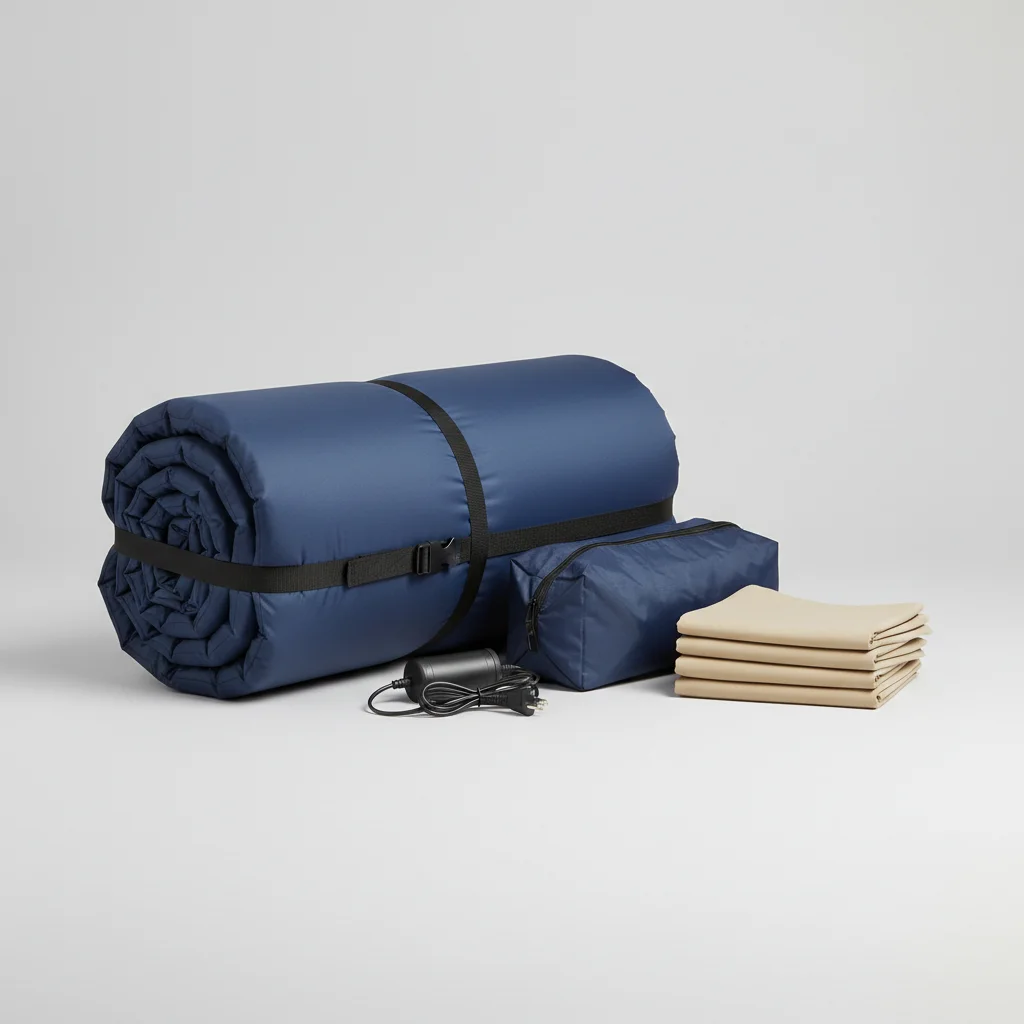
When considering air mattress storage, it’s generally recommended to deflate and properly fold your air mattress for long-term preservation. While an air mattress can technically remain inflated for several weeks or even months without immediate damage, this practice can significantly shorten its overall lifespan and increase the risk of leaks. For optimal longevity, aim to store your air mattress deflated within a few days of use, especially if it won’t be used again in the immediate future.
Why Deflate for Long-Term Storage?
Leaving an air mattress inflated for extended periods puts continuous stress on its seams and internal support structures. The constant pressure can stretch the material, leading to micro-tears and weakening the adhesive bonds over time. This is particularly true for PVC mattresses, which are more prone to stretching and developing pinhole leaks under sustained pressure. Deflating the mattress relieves this stress, allowing the material to rest and preventing premature wear and tear. Furthermore, an inflated mattress takes up considerably more space, making proper storage more challenging and increasing the likelihood of accidental punctures or abrasions from other stored items.
The Impact of Temperature and Humidity
Environmental factors play a crucial role in how long an air mattress can remain inflated without issues. Extreme temperatures, both hot and cold, can affect the material’s integrity. High heat can cause the PVC or TPU to expand and become more pliable, making it susceptible to stretching and damage. Conversely, very cold temperatures can make the material brittle, increasing the risk of cracks if the mattress is moved or bumped while inflated. High humidity can also contribute to mold and mildew growth, especially if there’s any moisture trapped inside the mattress. For these reasons, storing an inflated air mattress in an attic, garage, or damp basement is strongly discouraged. A climate-controlled environment is always best for any type of air mattress storage.
Best Practices for Deflated Storage
|
Our Picks for the Best Air Mattress in 2026
As an Amazon Associate I earn from qualifying purchases.
|
||
| Num | Product | Action |
|---|---|---|
| 1 | iDOO Queen Air Mattress with Built in Pump, 18 Raised Comfort Inflatable Blow up Mattress, Upgraded Four Chamber Portable Air Bed for Camping, Guests and Home, Colchon Inflable, 650 lbs Max |

|
| 2 | Intex 64417ED 22in Queen Dura-Beam Comfort Plush High-Rise Inflatable Air Mattress with Built in Pump for Travel and Camping, 600lb Weight Capacity |
|
| 3 | Air Mattress Queen with Built in Pump, Inflatable Mattress Blow Up Mattress 16 Raised Comfort,Upgraded Surface Portable Bed, Air Bed for Home, Guest, Camping, Colchone Inflable, 650 lbs |
|
| 4 | Intex Dura-Beam Deluxe Comfort-Plush Elevated: Fiber-Tech – Queen Size – Built-in Electric Pump – 18in Bed Height – 600lb Weight Capacity |
|
| 5 | Intex Twin Size Air Mattress, 18in Height, Built-in Pump, Dura-Beam Deluxe Comfort-Plush - Portable Inflatable Blow-up Bed for Camping, Travel, Guests |
|
| 6 | JOYTUTUS 5.5-5.8Ft Truck Bed Air Mattress with Removable Tailgate Extension,Thickened Inflatable Full Size Short Truck Beds, with Air Pump&2 Pillows,Black |
|
| 7 | Queen Air Mattress with Built in Pump Luxurious Comfort Raised Inflatable Mattress Queen Airbed Blow Up Mattress for Home and Guests Air Bed 2 Mins Fast Inflate/Deflate 660 lbs Max |
|
| 8 | Intex Air Mattress, 64123ED Dura-Beam Plus Pillow Rest Fiber-Tech – Queen Size – Built-in Electric Pump – 16.5in Bed Height – 600lb Weight Capacity |
|
| 9 | OhGeni Queen Air Mattress with Built in Pump, Inflatable Mattress Blow Up Mattress 18 Raised Comfort,Upgraded Surface Portable Bed, Air Bed for Home, Guest, Camping, Colchone Inflable, 650 lbs |
|
| 10 | Queen Air Mattress Full with Built in Pump for Camping 16" High Speed Inflatable Mattress Inflation Completed in 3 Minutes, Luxury Blow up Mattress Comfort Flocked Airbed for Guest,Home |
|
Properly deflating and folding your air mattress is key to maximizing its lifespan. First, ensure the mattress is completely dry before folding to prevent mold and mildew. Use a pump to remove as much air as possible, then roll or fold it neatly. Avoid sharp creases that can weaken the material. Store the deflated mattress in its original carrying bag or a protective container to shield it from dust, pests, and accidental punctures. A cool, dry place away from direct sunlight and extreme temperature fluctuations is ideal. Consider adding a desiccant packet to the storage bag if you live in a humid climate to absorb any residual moisture.
- Ensure the mattress is completely dry before folding.
- Remove all air using a pump for a compact fold.
- Fold or roll neatly, avoiding sharp creases.
- Store in its original bag or a protective container.
- Choose a cool, dry, and dark storage location.
When is it Okay to Leave an Air Mattress Inflated?
While long-term inflation is not recommended, leaving an air mattress inflated for short periods, such as a weekend camping trip or for guests staying a few nights, is generally acceptable. For instance, if you have guests arriving on Friday and leaving on Sunday, keeping the mattress inflated for those three days will likely not cause significant damage. However, if the mattress will be unused for more than a week, it’s always better to deflate it. This small effort can significantly extend the life of your investment. Always check the manufacturer’s recommendations, as some higher-quality air mattresses with more robust construction might tolerate short-term inflation better than budget models.
For those seeking durable options that might withstand slightly longer periods of inflation, consider models with reinforced seams and thicker materials.These often feature advanced internal coil-beam construction that provides better stability and resistance to stretching. However, even with premium models, the principle of deflating for long-term storage remains the gold standard for preservation. Investing in a good quality air mattress and following proper storage guidelines will ensure it’s ready for use whenever you need it, without unexpected leaks or structural failures.
