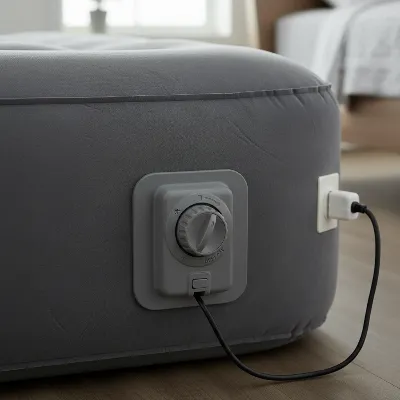
Have you ever found yourself wrestling a stubborn, air-filled giant, desperately trying to pack away your air mattress, only to realize your pump is missing or out of commission? It’s a common scenario, whether you’re wrapping up a camping trip, tidying up after guests, or simply needing to reclaim your living space. An air mattress is a marvel of convenience, offering comfort and flexibility, but its true value is often realized when it can be efficiently put away. This guide is your ultimate resource for mastering the art of deflating an air mattress quickly and effectively, all without relying on a pump. We’ll explore ingenious manual techniques and clever uses of everyday household items, ensuring your air mattress is flat, compact, and ready for its next adventure with minimal fuss.
Why Effective Air Mattress Deflation Matters
Efficiently deflating your air mattress isn’t just about saving time; it’s crucial for its longevity, ease of storage, and overall convenience. Imagine trying to cram a half-inflated mattress into a small closet or backpack—it’s a frustrating, often impossible task. Proper deflation allows for a tight, compact fold, saving valuable space in your home, vehicle, or camping gear.
Beyond storage, fully deflating an air mattress significantly extends its lifespan. Trapped air can put unnecessary stress on the seams and material, leading to wear and tear, and eventually, leaks. By systematically expelling all the air, you minimize internal pressure and prevent unwanted creases, which are often precursors to damage. This proactive approach ensures your comfortable temporary bed remains in excellent condition, ready to provide a restful night’s sleep whenever needed.
The Challenges of Deflating Without a Pump
Deflating an air mattress without a dedicated pump can initially seem like a daunting task, as these inflatables are designed to hold air securely. The primary challenge lies in overcoming the mattress’s internal air pressure and the design of its tightly sealed valves. Without the suction or forced air of a pump, it can take considerable physical effort and patience to push out all the air, especially from larger models. Stubborn air pockets often linger, making it difficult to achieve a truly flat and compact mattress, which is essential for proper storage. Additionally, rushing the process or applying excessive force can potentially damage the seams or the valve, shortening the life of your air mattress.
Effective Manual Methods for Deflation
Even without a pump, you can achieve a surprisingly quick and thorough deflation using smart manual techniques. These methods leverage basic physics and your own body weight to encourage air out of the mattress.
The Classic Roll-and-Press Technique
|
Our Picks for the Best Air Mattress in 2026
As an Amazon Associate I earn from qualifying purchases.
|
||
| Num | Product | Action |
|---|---|---|
| 1 | Queen Air Mattress Full with Built in Pump for Camping 16" High Speed Inflatable Mattress Inflation Completed in 3 Minutes, Luxury Blow up Mattress Comfort Flocked Airbed for Guest,Home |

|
| 2 | Queen Air Mattress with Built in Pump Luxurious Comfort Raised Inflatable Mattress Queen Airbed Blow Up Mattress for Home and Guests Air Bed 2 Mins Fast Inflate/Deflate 660 lbs Max |
|
| 3 | iDOO Queen Air Mattress with Built in Pump, 18 Raised Comfort Inflatable Blow up Mattress, Upgraded Four Chamber Portable Air Bed for Camping, Guests and Home, Colchon Inflable, 650 lbs Max |
|
| 4 | Intex Dura-Beam Deluxe Comfort-Plush Elevated: Fiber-Tech – Queen Size – Built-in Electric Pump – 18in Bed Height – 600lb Weight Capacity |
|
| 5 | Intex Twin Size Air Mattress, 18in Height, Built-in Pump, Dura-Beam Deluxe Comfort-Plush - Portable Inflatable Blow-up Bed for Camping, Travel, Guests |
|
| 6 | Intex Air Mattress, 64123ED Dura-Beam Plus Pillow Rest Fiber-Tech – Queen Size – Built-in Electric Pump – 16.5in Bed Height – 600lb Weight Capacity |
|
| 7 | Air Mattress Queen with Built in Pump, Inflatable Mattress Blow Up Mattress 16 Raised Comfort,Upgraded Surface Portable Bed, Air Bed for Home, Guest, Camping, Colchone Inflable, 650 lbs |
|
| 8 | Intex 64417ED 22in Queen Dura-Beam Comfort Plush High-Rise Inflatable Air Mattress with Built in Pump for Travel and Camping, 600lb Weight Capacity |
|
| 9 | JOYTUTUS 5.5-5.8Ft Truck Bed Air Mattress with Removable Tailgate Extension,Thickened Inflatable Full Size Short Truck Beds, with Air Pump&2 Pillows,Black |
|
| 10 | OhGeni Queen Air Mattress with Built in Pump, Inflatable Mattress Blow Up Mattress 18 Raised Comfort,Upgraded Surface Portable Bed, Air Bed for Home, Guest, Camping, Colchone Inflable, 650 lbs |
|
This is arguably the most fundamental and effective manual method. Begin by removing all bedding and clearing the area around the mattress to prevent punctures. Locate the air valve—it might be a twist valve or a pull-up cap—and open it fully to allow air to escape freely.
Start at the end of the mattress opposite the valve. Begin pressing down firmly with your hands, arms, or even your knees, slowly rolling the mattress towards the open valve. The key is to maintain consistent, firm pressure as you roll. This action creates a wave of compression, pushing the air ahead of it and out through the valve. Think of it like squeezing a giant tube of toothpaste. Continue rolling tightly, applying your body weight, until the mattress is as flat as possible.
Strategic Folding Techniques
For larger mattresses or to target stubborn air pockets, strategic folding can complement the rolling method. Once you’ve performed an initial roll, you might find some air still trapped.
Fold the mattress lengthwise in half, or even thirds, depending on its size. This reduces the surface area and concentrates the remaining air. Once folded, press down firmly on the creased sections, working your way towards the open valve. You can then resume rolling from the folded end, applying pressure to force out any remaining air. This method effectively creates narrower channels for the air to escape, ensuring a more complete deflation.
Gravity’s Helping Hand
Sometimes, the simplest solutions are the most overlooked. Gravity can assist in the deflation process, albeit slowly. If possible, place your air mattress on an inclined surface, such as against a wall or over a large piece of furniture, with the valve positioned at the lowest point. As air is naturally lighter than the mattress material, it will tend to rise. Gravity will then help pull the mattress downwards, naturally pressing some air out through the open valve. While not the fastest method on its own, it can be a good starting point or a supplementary technique when you have time.
Leveraging Household Items for Rapid Deflation
When you need a quicker solution than purely manual methods, look no further than common household items. With a bit of ingenuity, these tools can dramatically speed up the deflation process.
Harnessing the Power of Your Vacuum Cleaner
Your everyday vacuum cleaner can be a powerful ally, especially if it has a “blower” function. Many shop vacs or even some upright vacuums come with this feature. If your vacuum can blow air out, simply attach the hose to the exhaust port and snugly fit the nozzle over the air mattress valve. Turn on the vacuum, and it will rapidly force air out of the mattress, flattening it in minutes.
If your vacuum only has a suction function, you can still use it, but with caution. Open the air mattress valve fully and place the vacuum hose directly over it. To create an effective seal, use towels or blankets to fill any gaps around the hose and the valve. While not as efficient as the blower function, the suction will pull air out, significantly speeding up the process compared to manual pressing alone. However, avoid strong suction directly on the valve or fabric for extended periods, as it could potentially cause damage.
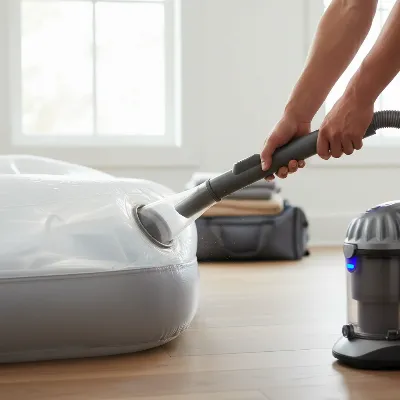 A person using a vacuum cleaner with a blower function to quickly deflate an air mattress.
The Rolling Pin or Rigid Edge Method
For a more controlled and systematic approach, a rolling pin or any flat, rigid edge can be incredibly useful. After opening the valve and doing an initial press, use a rolling pin, a sturdy book, or even a cutting board to apply even pressure across the mattress surface. Start from the end opposite the valve and slowly roll or press the rigid item towards the valve. This technique helps push out stubborn air pockets that might evade hand pressure, leading to a much flatter mattress. Always ensure the object is smooth and free of sharp edges to avoid puncturing the mattress material.
Utilizing Heavy Objects
Heavy objects can provide consistent, hands-free pressure to aid in deflation. After opening the valve, lay the mattress as flat as possible. Place several heavy books, weights, or even a sturdy piece of furniture strategically across different sections of the mattress, working towards the valve. The sustained weight will continuously press air out. This method is excellent for getting the bulk of the air out while you attend to other tasks, and it can be particularly effective when left overnight on a partially deflated mattress to remove residual air.
The Plastic Bag Trick
A surprisingly effective, low-tech method involves using a large plastic trash bag. This can act as a makeshift compression tool. Open the air mattress valve and ensure it’s fully accessible. Then, carefully slip a large, sturdy trash bag over a section of the mattress, or even the entire mattress if it’s small enough. Begin pressing down on the mattress, directing the air into the plastic bag. The bag will inflate, creating a sealed environment that helps to consolidate and push the air out more efficiently. Once the air is in the bag, you can manually squeeze the bag to expel the air through the valve opening.
Hair Dryer (Cool Setting Only)
While less common, some individuals have found success using a hair dryer on its cool setting. The idea is to direct a steady stream of cool air into the valve opening. The slight pressure from the blowing air, combined with manual rolling, can help guide trapped air outwards. However, it’s absolutely crucial to use only the cool setting. Heat can damage the mattress material and seals, leading to irreversible harm. This method is generally less efficient than a vacuum’s blower function but can be an option in a pinch.
Expert Tips for Speed and Efficiency
Achieving a perfectly flat air mattress without a pump requires a combination of technique and patience. Here are some expert tips to make the process smoother and faster:
- Prep Your Area: Before you begin, clear away any sharp objects, debris, or furniture that could snag or puncture the mattress during the deflation process. A clean, flat surface is ideal.
- Keep the Valve Wide Open: Ensure the air mattress valve is completely open and unobstructed throughout the entire deflation process. Any partial closure will trap air and slow things down.
- Warm it Up (Slightly): If possible, gently warm the mattress slightly, perhaps by placing it in a sunny spot for a few minutes. Warmer air expands, making it easier to push out of the mattress.
- Slow and Steady Rolling: Resist the urge to roll too quickly. Fast, uneven rolling can trap air pockets, forcing you to re-roll sections. A slow, deliberate roll with consistent pressure is far more effective.
- Massage Stubborn Pockets: If you notice small, persistent air pockets, gently knead or massage those areas with your hands to encourage the air to move towards the main valve.
- Consider a Compression Sack: For long-term storage or travel, once manually deflated and rolled, placing the air mattress in a compression sack can squeeze out any remaining residual air, making it incredibly compact.
Comparing Popular Deflation Methods
When choosing a method to deflate your air mattress without a pump, consider the speed, effort, and tools you have available. Here’s a comparison of some common techniques:
| Feature | Manual Roll-and-Press | Vacuum Cleaner (Blower) | Heavy Objects | Rolling Pin/Rigid Edge |
|---|---|---|---|---|
| Speed | Moderate | Very Fast | Slow to Moderate | Moderate |
| Effort Required | High | Low | Low (once set up) | Moderate |
| Tools Needed | None (hands/body) | Vacuum with blower | Books, weights | Rolling pin, book, board |
| Compactness | Very Good | Excellent | Good | Very Good |
| Best For | Camping, no electricity | Home use, quick results | Passive deflation | Targeted air removal |
| Key Benefit | Always available | Most efficient | Hands-free | Even pressure |
Safety Precautions During Deflation
While deflating an air mattress manually is generally safe, a few precautions can prevent damage to your mattress and ensure your safety:
- Clear the Area: Always ensure the surface around and beneath the air mattress is free of sharp objects, pet claws, or anything that could puncture the material as it flattens and shifts.
- Avoid Over-Pressurization: Do not jump on the mattress or apply excessive, sudden force. While you need pressure to expel air, too much can stress the seams, leading to tears or leaks. A steady, even pressure is best.
- Mind the Valve: Be gentle with the valve. Forcing it open or closed, or applying undue stress with an attached tool, can damage its seal and functionality.
- No Heat Sources: Absolutely never use a hair dryer on a hot setting or any other heat source to aid deflation. Heat can melt or weaken the PVC or vinyl material of the mattress, causing irreparable damage and potentially releasing harmful fumes.
- Supervise Children and Pets: Keep children and pets away from the deflating mattress. They could accidentally jump on it, get tangled, or cause punctures.
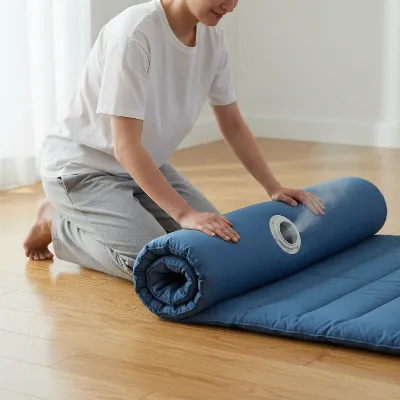 A person carefully deflating an air mattress by rolling, avoiding sharp objects in a safe, clear environment.
Proper Storage After Deflation
Once your air mattress is completely deflated, proper storage is paramount to maintain its condition and extend its lifespan.
- Clean and Dry: Before folding, wipe down the mattress with a damp cloth to remove any dirt, dust, or moisture, then allow it to air dry completely. Storing a damp mattress can lead to mildew and material degradation.
- Fold Neatly: Avoid cramming or scrunching the mattress. Instead, fold it neatly along its natural seams or creases. Start by folding it lengthwise into thirds or quarters, then roll it tightly from the end opposite the valve towards the valve. This method minimizes sharp creases, which can weaken the material over time.
- Use Original Bag or Container: If you have the original storage bag or box, use it! These are often designed to protect the mattress from dust, dirt, and light. If not, a sturdy duffel bag or a dedicated compression sack works well.
- Cool, Dry Place: Store the deflated mattress in a cool, dry place, away from direct sunlight, extreme temperatures, and rodents or pests. Garages, closets, or under beds are usually suitable options. Avoid attics or basements prone to moisture or temperature fluctuations.
Conclusion
Deflating an air mattress efficiently without a pump is a skill that offers immense practical benefits, from saving space and extending your mattress’s life to simply reducing frustration. By utilizing methods like the classic roll-and-press, strategic folding, or even clever household items like a vacuum cleaner or a rolling pin, you can achieve a compact, ready-to-store mattress in no time. Remember to always prioritize safety, clear your area of sharp objects, and avoid excessive force to protect your investment. With these techniques in your arsenal, you’ll find that putting away your air mattress is no longer a chore but a simple, straightforward task. What innovative ways have you discovered to get your air mattress perfectly flat when a pump isn’t an option?
Frequently Asked Questions
Can I deflate an air mattress completely just by opening the valve?
While opening the valve allows air to escape, simply relying on gravity will not fully deflate an Air Mattress. You will need to apply manual pressure, such as rolling or pressing, to expel most of the air and achieve a compact state for storage.
Is it safe to use a vacuum cleaner to deflate my air mattress?
Yes, using a vacuum cleaner with a blower function is generally safe and highly effective for rapid deflation. If your vacuum only has suction, use it cautiously by creating a seal around the valve and avoiding prolonged, strong suction directly on the material to prevent potential damage.
How can I remove stubborn air pockets when deflating?
To tackle stubborn air pockets, try folding the mattress into narrower sections and then applying firm, consistent pressure. Gently massaging or kneading the specific areas where air is trapped can also help guide it towards the open valve for release.
How should I prepare my air mattress before deflating it?
Before deflating, always remove all bedding, pillows, and any other items from the mattress. Ensure the surrounding area is clear of sharp objects or debris that could puncture or damage the mattress as it flattens and is handled.
What’s the best way to fold an air mattress for storage after deflation?
After completely deflating, fold the mattress lengthwise along its natural seams or creases. Then, roll it tightly from the end opposite the valve towards the valve. This method helps remove any residual air and creates a compact, neat package, preventing wrinkles and preserving the material.