To find and fix a leak in an air mattress, first fully inflate it and use the soapy water test to pinpoint the exact location of the leak by observing bubble formation. Once located, thoroughly clean and dry the area, apply a vinyl patch from a repair kit, and allow it to cure for several hours (typically 4-24 hours) before re-inflating and testing. This process effectively seals punctures and restores the mattress’s functionality.
Why Does Your Air Mattress Keep Deflating?
Understanding why your air mattress loses air is the first step toward a solution. Not every soft mattress indicates a puncture; new air mattresses, especially, can seem to deflate as the vinyl material stretches and settles, requiring a few re-inflations before stabilizing. However, if your mattress consistently goes flat overnight, a leak is likely the culprit.
Common causes include tiny punctures from sharp objects like pet claws, twigs, or uneven ground. Over time, repeated folding and body weight can also weaken the seams, leading to small cracks or splits. The air valve itself is another frequent problem area; a loose plug or a damaged valve stem can allow air to escape slowly and stealthily. Furthermore, significant temperature drops overnight can cause the air inside to contract, reducing internal pressure and making the mattress feel softer without an actual leak. Over-inflating the mattress also strains its material and seams, increasing the risk of damage.
Pinpointing the Problem: How to Locate an Air Mattress Leak
Finding a leak can sometimes feel like hunting for a needle in a haystack, especially if it’s a pinhole. However, with the right techniques, you can pinpoint even the smallest escape routes.
The “Listen and Feel” Method
Start by fully inflating your air mattress. Then, lie on it or apply gentle pressure to increase the internal air pressure, making any leaks more noticeable. Slowly move your ear close to the surface, listening for any faint hissing sounds. Pay particular attention to the seams, corners, and the area around the air valve, as these are common leak sites. Simultaneously, run your hand parallel to the mattress surface, about two inches away, to feel for any escaping drafts of air. Your ear is often more sensitive to the sound, while your hand can detect subtle airflow.
The Soapy Water Test
This is arguably the most effective and widely recommended method for detecting leaks.
- Inflate the Mattress: Fully inflate your air mattress, but avoid over-inflating it, which can exacerbate the issue.
- Prepare the Solution: Mix a generous amount of dish soap with water in a spray bottle or create a very sudsy solution in a bowl with a sponge. The goal is to produce rich, thick bubbles.
- Apply and Observe: Systematically spray or sponge the soapy water over small sections of the entire mattress surface, including seams, corners, and the bottom. As you go, apply gentle pressure to the mattress. Watch closely for areas where bubbles rapidly form and grow, indicating air escaping through a puncture. These bubbles will be distinct from the normal soap suds.
- Mark the Spot: Once you spot a leak, circle it immediately with a permanent marker or a piece of tape so you don’t lose its location.
“The soapy water test is a game-changer for elusive leaks. It turns an invisible problem into a clearly visible solution, making the repair process straightforward.” – Scott Fitterman, Outdoor Skills Expert
Submersion Technique for Smaller Mattresses
|
Our Picks for the Best Air Mattress in 2026
As an Amazon Associate I earn from qualifying purchases.
|
||
| Num | Product | Action |
|---|---|---|
| 1 | Intex Air Mattress, 64123ED Dura-Beam Plus Pillow Rest Fiber-Tech – Queen Size – Built-in Electric Pump – 16.5in Bed Height – 600lb Weight Capacity |

|
| 2 | iDOO Queen Air Mattress with Built in Pump, 18 Raised Comfort Inflatable Blow up Mattress, Upgraded Four Chamber Portable Air Bed for Camping, Guests and Home, Colchon Inflable, 650 lbs Max |
|
| 3 | Intex 64417ED 22in Queen Dura-Beam Comfort Plush High-Rise Inflatable Air Mattress with Built in Pump for Travel and Camping, 600lb Weight Capacity |
|
| 4 | Queen Air Mattress Full with Built in Pump for Camping 16" High Speed Inflatable Mattress Inflation Completed in 3 Minutes, Luxury Blow up Mattress Comfort Flocked Airbed for Guest,Home |
|
| 5 | OhGeni Queen Air Mattress with Built in Pump, Inflatable Mattress Blow Up Mattress 18 Raised Comfort,Upgraded Surface Portable Bed, Air Bed for Home, Guest, Camping, Colchone Inflable, 650 lbs |
|
| 6 | Intex Dura-Beam Deluxe Comfort-Plush Elevated: Fiber-Tech – Queen Size – Built-in Electric Pump – 18in Bed Height – 600lb Weight Capacity |
|
| 7 | Intex Twin Size Air Mattress, 18in Height, Built-in Pump, Dura-Beam Deluxe Comfort-Plush - Portable Inflatable Blow-up Bed for Camping, Travel, Guests |
|
| 8 | JOYTUTUS 5.5-5.8Ft Truck Bed Air Mattress with Removable Tailgate Extension,Thickened Inflatable Full Size Short Truck Beds, with Air Pump&2 Pillows,Black |
|
| 9 | Air Mattress Queen with Built in Pump, Inflatable Mattress Blow Up Mattress 16 Raised Comfort,Upgraded Surface Portable Bed, Air Bed for Home, Guest, Camping, Colchone Inflable, 650 lbs |
|
| 10 | Queen Air Mattress with Built in Pump Luxurious Comfort Raised Inflatable Mattress Queen Airbed Blow Up Mattress for Home and Guests Air Bed 2 Mins Fast Inflate/Deflate 660 lbs Max |
|
If you have a smaller air mattress or sleeping pad, and you’re struggling to find the leak with other methods, partial submersion can be effective. Inflate the mattress partially and submerge sections of it into a bathtub or a large basin of water. Look for a steady stream of bubbles rising to the surface, marking the leak when found. This method is less practical for full-sized air mattresses due to their size and the risk of getting built-in pumps wet.
Checking the Air Valve
Before you assume a puncture, always inspect the air valve. Ensure it is tightly sealed and not loose or damaged. Sometimes, simply re-sealing the valve or tightening its components can resolve a slow leak. Listen closely around the valve, as small cracks in the surrounding material are also common.
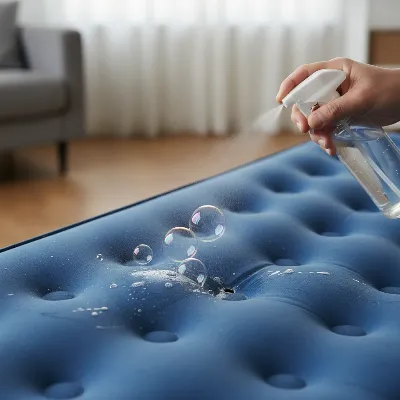 A person spraying soapy water on an inflated air mattress, looking for bubbles to detect a leak
Essential Tools for Air Mattress Leak Repair
Once you’ve located the troublesome leak, it’s time to gather your repair supplies. Most air mattress leaks are surprisingly simple to fix with the right tools.
Standard Repair Kit Components
Many air mattresses come with a basic repair kit, but if yours didn’t, these items are widely available. A typical kit usually contains:
- Vinyl Patches: Pre-cut patches made from durable vinyl or PVC, designed to bond effectively with your air mattress material. It’s often recommended to round the corners of any square patches to prevent them from peeling.
- Adhesive/Glue: A specialized adhesive, often a rubber cement or a strong vinyl repair glue like Aquaseal FD, that creates a strong, flexible, and waterproof bond.
- Applicator: A small tool or brush for spreading the adhesive evenly.
- Sandpaper (optional): Fine-grit sandpaper (around 120-grit) for preparing flocked surfaces.
DIY Alternatives for Emergency Fixes
Sometimes, you need a quick fix when a repair kit isn’t immediately available. While not permanent solutions, these can save your night:
- Duct Tape or Electrical Tape: For a temporary patch, cut a piece of strong tape larger than the hole and press it firmly over the leak. Ensure the mattress is deflated for the best adhesion. This can buy you time until a proper repair can be made.
- Super Glue: For tiny pinhole leaks, a small dab of super glue applied directly to the hole can create a temporary seal. Be careful not to let it spread excessively, and allow it several hours to dry completely before re-inflating.
- Bicycle Inner Tube Repair Kit: Many find that the patches and rubber cement from a bicycle inner tube repair kit work effectively on air mattresses for small holes.
Step-by-Step Guide to Patching Your Air Mattress
With your leak located and tools ready, follow these steps for a durable repair.
Preparing the Surface
- Mark the Spot: Re-confirm your leak location and mark it clearly if you haven’t already.
- Fully Deflate: Completely deflate the air mattress. A flat, relaxed surface ensures the patch adheres correctly without internal air pressure interfering.
- Clean the Area: This is a critical step for a successful bond. Use a mild soap solution and a soft cloth, or isopropyl alcohol, to thoroughly clean the area around the leak. Remove any dirt, dust, body oils, or moisture. Allow the surface to dry completely before proceeding.
- Sand (if flocked): If the leak is on a flocked (velvety) surface, use 120-grit sandpaper to lightly buff the velvety texture away, creating a smoother surface for the adhesive to bond to. Be gentle to avoid thinning the material too much.
Applying the Patch
- Cut the Patch: Cut a vinyl patch from your kit so that it extends at least 1 inch (2.5 cm) beyond the edges of the hole in all directions. Round the corners of the patch; this small detail significantly reduces the likelihood of the edges peeling up later.
- Apply Adhesive: Apply a thin, even layer of the repair adhesive to the back of your patch, or directly to the cleaned area around the leak, as per your kit’s instructions.
- Position and Press: Carefully place the patch directly over the leak, ensuring it fully covers the damaged area. Press down firmly, working from the center outwards to smooth out any air bubbles or wrinkles beneath the patch. You can use a roller or a hard, flat object to apply even pressure. Hold it in place for a few minutes to allow the initial bond to form.
Curing and Testing
- Curing Time: Adherence to the curing time specified in your repair kit’s instructions is crucial. This can range from a few hours to 24 hours. Rushing this step can lead to a failed repair.
- Test Your Repair: Once the curing time has passed, fully inflate your air mattress. Use the soapy water test again over the patched area to confirm that the leak has been successfully sealed. If no bubbles appear, your repair is complete!
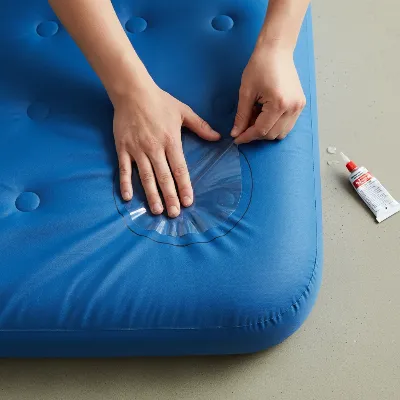 A person applying a patch to a cleaned, deflated air mattress leak with adhesive
Air Mattress Leak Prevention: Tips for Long-Lasting Comfort
Preventing leaks is far easier than fixing them. Incorporating these simple habits can significantly extend the life of your air mattress.
Proper Setup and Environment
- Clear the Ground: Always ensure the area where you set up your air mattress is free of sharp objects like sticks, rocks, or even small debris.
- Use a Barrier: When camping, always place a ground cloth, tarp, or tent floor beneath your air mattress to add a protective layer against punctures from below.
- Indoor Care: Indoors, keep pets away from the mattress, as their claws can easily cause damage. Avoid placing the mattress near heat sources or rough surfaces.
Inflation Best Practices
- Avoid Over-inflation: While a firm mattress is desirable, over-inflating puts excessive strain on seams and the material itself, increasing the risk of stretching and leaks. Inflate until it’s firm but not rock-hard.
- Acclimatize: If bringing an air mattress from a cold environment into a warm one, allow it to acclimatize before inflating fully. Air expands with heat, and sudden inflation can cause stress.
Storage and Maintenance
- Clean Before Storing: Wipe down your air mattress after each use to remove dirt, sweat, and oils, which can degrade the material over time. Ensure it’s completely dry before storage to prevent mildew.
- Store Loosely: Instead of folding it tightly, try to roll your air mattress loosely or store it in its original bag in a cool, dry place. Avoid placing heavy objects on top of it.
- Check Valves: Periodically inspect and tighten the air valve. Ensure it’s free from debris that could impede a tight seal.
Using Protectors
- Mattress Topper or Fitted Sheet: Using a mattress topper or even a fitted sheet not only adds comfort but also provides an extra layer of protection against minor abrasions, dirt, and punctures from above.
Conclusion
A leaky air mattress doesn’t have to mean the end of its life or a restless night. By understanding the common causes of deflation, diligently using the soapy water test to locate leaks, and applying a proper patch, you can restore your air mattress to its comfortable best. Remember, preparation is key: taking a few moments to clear your sleeping area, avoiding over-inflation, and storing your mattress correctly will dramatically reduce the chances of future leaks. With these tips, you’ll be well-equipped to ensure your air mattress provides many more nights of comfortable sleep, whether at home or under the stars. So, the next time your air mattress starts to sag, will you be ready to tackle the challenge?
How to Patch an Air Mattress Leak
This guide provides step-by-step instructions to effectively patch a leak in your air mattress, ensuring a durable repair.
Completely deflate the air mattress and clearly mark the leak location. Clean the area around the leak thoroughly with mild soap or isopropyl alcohol, then allow it to dry completely. If the surface is flocked, lightly buff it with 120-grit sandpaper to create a smoother bonding surface.
Cut a vinyl patch from your repair kit, ensuring it extends at least 1 inch (2.5 cm) beyond the hole in all directions, and round its corners. Apply a thin, even layer of adhesive to the back of the patch or directly to the cleaned area. Carefully place the patch over the leak, pressing firmly from the center outwards to remove air bubbles.
Allow the patch to cure for the time specified in your repair kit's instructions, typically a few hours to 24 hours. After curing, fully inflate the air mattress and perform the soapy water test over the patched area. If no bubbles appear, the leak is successfully sealed.

I was so frustrated with my air mattress constantly deflating, and I thought I’d have to buy a new one. The soapy water test mentioned here was a game-changer! I found a tiny pinhole I never would have seen otherwise. After patching it, my mattress has held air perfectly for a week now. So glad I tried this before giving up on it.
This guide was really helpful. I had a slow leak that was driving me crazy, and I appreciated the tip about new mattresses stretching. Mine isn’t new, so I knew it was a real leak. The instructions for applying the vinyl patch were clear, and it seems to have done the trick. I just wish the curing time wasn’t so long; waiting 24 hours was a bit inconvenient.
I followed the steps to fix a leak in my camping air mattress. The soapy water test worked well to find the hole. However, even after cleaning and patching, it still seems to lose a little air overnight. It’s much better than before, but not completely sealed. Maybe I didn’t let the patch cure long enough, or the puncture was more complex than it looked.
Fantastic advice! My guest air mattress started losing air, and I was worried it was a goner. The detailed explanation of how to find the leak using the bubble formation was spot on. I used a standard repair kit, and after letting it cure for about 12 hours, the mattress is as good as new. Saved me a lot of money!