An air mattress deflates overnight due to several common factors, including subtle temperature shifts, natural material stretching, valve issues, or physical damage like pinholes and seam leaks. While some air loss is normal due to air contraction in cooler temperatures, significant deflation often indicates a repairable problem. Understanding these causes and applying targeted fixes can restore comfort and extend the lifespan of your inflatable bed.
Why Your Air Mattress Deflates Overnight: Common Culprits
Several factors contribute to an air mattress losing firmness, ranging from natural phenomena to physical damage. Knowing these common issues can help you pinpoint the problem and find the right solution.
The Silent Enemy: Pinholes, Punctures, and Seam Leaks
Small holes, known as pinholes, or larger punctures can occur from sharp objects, rough surfaces, or even general wear and tear over time. Seams, where different sections of the mattress material are joined, are particularly vulnerable points for leaks to develop due to stress or manufacturing imperfections. These physical breaches allow air to escape gradually, often unnoticed until the mattress is significantly softer.
Valve Issues and Loose Seals
The inflation valve is a critical component, responsible for both allowing air in and keeping it sealed within. Over time, or with frequent use and handling, the valve mechanism can become misaligned, worn, or damaged. A tiny gap or a seal that isn’t perfectly airtight will lead to a slow, steady escape of air, making the mattress noticeably softer by morning. The nozzle opening can also lose its rigidity, contributing to air loss.
Temperature Changes and Material Stretching
Air mattresses are made from flexible materials like PVC or vinyl that react to their environment. When inflated in a warm room and then moved to a cooler space, the air inside the mattress contracts, causing a reduction in internal pressure and making the mattress feel less firm. This isn’t necessarily a leak but a normal physical phenomenon. Similarly, new air mattresses, or those used after a period of storage, may experience “material stretching” during their initial uses. This expansion increases the internal volume, which can lead to a drop in pressure and the sensation of deflation until the material fully acclimates.
Over-inflation and Manufacturing Defects
While it might seem counterintuitive, over-inflating an air mattress can put excessive stress on its seams and material, potentially leading to ruptures or accelerated wear that causes leaks. Despite quality control, some mattresses may have minor manufacturing defects that lead to slow leaks from the start, such as compromised seams or faulty valve components.
Diagnosing the Deflation Problem: A Step-by-Step Guide
Successfully fixing a deflating air mattress begins with accurately identifying the source of the air loss. Here’s how to systematically troubleshoot the issue.
Visual Inspection: Looking for Obvious Damage
|
Our Picks for the Best Air Mattress in 2026
As an Amazon Associate I earn from qualifying purchases.
|
||
| Num | Product | Action |
|---|---|---|
| 1 | Intex 64417ED 22in Queen Dura-Beam Comfort Plush High-Rise Inflatable Air Mattress with Built in Pump for Travel and Camping, 600lb Weight Capacity |

|
| 2 | JOYTUTUS 5.5-5.8Ft Truck Bed Air Mattress with Removable Tailgate Extension,Thickened Inflatable Full Size Short Truck Beds, with Air Pump&2 Pillows,Black |
|
| 3 | Air Mattress Queen with Built in Pump, Inflatable Mattress Blow Up Mattress 16 Raised Comfort,Upgraded Surface Portable Bed, Air Bed for Home, Guest, Camping, Colchone Inflable, 650 lbs |
|
| 4 | OhGeni Queen Air Mattress with Built in Pump, Inflatable Mattress Blow Up Mattress 18 Raised Comfort,Upgraded Surface Portable Bed, Air Bed for Home, Guest, Camping, Colchone Inflable, 650 lbs |
|
| 5 | iDOO Queen Air Mattress with Built in Pump, 18 Raised Comfort Inflatable Blow up Mattress, Upgraded Four Chamber Portable Air Bed for Camping, Guests and Home, Colchon Inflable, 650 lbs Max |
|
| 6 | Intex Twin Size Air Mattress, 18in Height, Built-in Pump, Dura-Beam Deluxe Comfort-Plush - Portable Inflatable Blow-up Bed for Camping, Travel, Guests |
|
| 7 | Intex Dura-Beam Deluxe Comfort-Plush Elevated: Fiber-Tech – Queen Size – Built-in Electric Pump – 18in Bed Height – 600lb Weight Capacity |
|
| 8 | Queen Air Mattress Full with Built in Pump for Camping 16" High Speed Inflatable Mattress Inflation Completed in 3 Minutes, Luxury Blow up Mattress Comfort Flocked Airbed for Guest,Home |
|
| 9 | Intex Air Mattress, 64123ED Dura-Beam Plus Pillow Rest Fiber-Tech – Queen Size – Built-in Electric Pump – 16.5in Bed Height – 600lb Weight Capacity |
|
| 10 | Queen Air Mattress with Built in Pump Luxurious Comfort Raised Inflatable Mattress Queen Airbed Blow Up Mattress for Home and Guests Air Bed 2 Mins Fast Inflate/Deflate 660 lbs Max |
|
Start by fully inflating your air mattress and visually inspecting its entire surface. Look for any visible cuts, tears, or holes. Pay close attention to the top sleeping surface, the side seams, and the underside that rests on the floor, as these are common areas for damage. Sometimes, a noticeable tear will be immediately apparent.
Listening for Leaks: The Auditory Approach
With the mattress fully inflated, find a quiet room and listen carefully. Slowly move your ear along the surface, especially around the seams and the valve area. You might hear a faint hissing or whistling sound where air is escaping. Applying slight pressure to different sections of the mattress can help force more air out, making a small leak easier to detect.
The Soap and Water Test: Pinpointing Hidden Leaks
This is arguably the most effective method for finding elusive leaks. Inflate your air mattress to its maximum firmness. Mix a generous amount of dish soap with water in a spray bottle. Spray the soapy solution liberally over the entire surface of the mattress, focusing on the valve, seams, and any suspicious areas. Watch for bubbles forming, which will clearly indicate where air is escaping. Once a leak is identified, mark it with a permanent marker or a piece of tape before wiping off the soap and deflating the mattress.
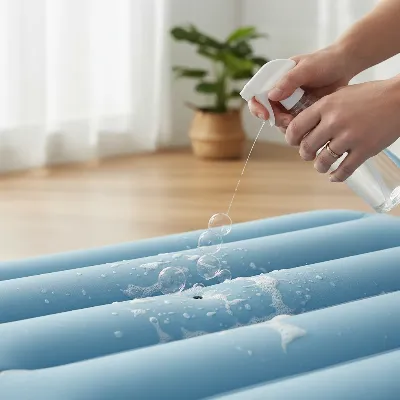 Person spraying soapy water on an inflated air mattress, looking for bubbles to indicate a leak
Checking Valves and Pump Connections
Even without visible damage, a loose or faulty valve can be the culprit. Ensure that the valve cap is securely closed and that the inflation port is tightly sealed, especially if your mattress has an integrated pump. If the leak appears to be coming from around the valve, it might be due to wear or a poor seal rather than a puncture in the mattress material itself.
The Tissue Paper or Feather Test: A Dry Alternative
For extremely small leaks that don’t produce a clear hiss or many bubbles, you can try a dry method. Fully inflate the mattress in a still room. Hold a very lightweight piece of tissue paper, a small feather, or a thin strip of plastic wrap close to the mattress surface and slowly move it across. If the material flutters or moves, it indicates a tiny stream of escaping air.
Quick Fixes for a Deflating Air Mattress: Immediate Solutions
Once you’ve identified the cause of deflation, several quick fixes can restore your air mattress to comfortable working order.
Patching Small Holes: Using Repair Kits Effectively
For punctures or small tears, a dedicated air mattress repair kit is your best friend. Most kits include adhesive patches and glue, designed for various air mattress materials.
- Preparation: Fully deflate the mattress and clean the area around the leak thoroughly. Use an alcohol wipe or mild detergent to remove any dirt or debris, ensuring the patch adheres properly. Allow the area to dry completely.
- Application: Cut the patch to size, ensuring it overlaps the hole by at least an inch on all sides. Rounding the edges of the patch can help prevent it from peeling off. Apply the adhesive according to the kit’s instructions, then press the patch firmly over the leak. Hold it in place for 30 seconds to a minute to ensure a strong bond.
- Drying Time: Allow the adhesive to cure fully, which typically takes several hours, sometimes overnight, before re-inflating the mattress. This ensures a lasting seal.
> “To fix the leak, Fitterman suggests using a sleeping pad repair kit. He says most kits come with alcohol wipes, glue, and patches, and easy-to-follow directions.” – Scott Fitterman, Outdoor Skills Expert
Sealing Valve Leaks: Ensuring a Tight Seal
If the valve is leaking, ensure it’s securely closed. For minor leaks around the valve’s edge, a thick, well-applied layer of duct tape can serve as a temporary seal. Some users have also found success with seam sealants applied carefully around the valve’s base if it’s a structural issue rather than a simple loose cap. If the valve itself is damaged, a replacement valve might be necessary, though this can be more complex.
Addressing Temperature Changes: Understanding Acclimatization
When deflation is primarily due to temperature changes, simply adding more air can solve the problem. If you inflate your mattress in a warm environment and plan to use it in a cooler one (like a cold bedroom or outdoors at night), inflate it slightly firmer than desired. The air will contract as it cools, and the mattress will settle to a more comfortable firmness without becoming completely flat.
Temporary Fixes: Duct Tape and Other Emergency Solutions
In a pinch, especially when camping or in an emergency, duct tape can provide a temporary seal for a hole. Clean the area as best you can, ensure it’s dry, and apply a piece of duct tape that extends well beyond the hole. While not a permanent solution, it can get you through the night until a proper repair kit is available.
Preventative Measures: Keeping Your Air Mattress Inflated Longer
Proactive steps can significantly reduce the chances of your air mattress deflating unexpectedly and extend its overall lifespan.
Proper Inflation Techniques
Always inflate your air mattress to the manufacturer’s recommended firmness. Over-inflating can stress the seams and material, increasing the risk of leaks, especially with temperature fluctuations. For new mattresses, inflate, use, and then top off with more air a few times to allow the material to fully stretch and set.
Choosing the Right Placement
Place your air mattress on a clean, smooth surface free from sharp objects, debris, or uneven terrain. When camping, use a ground cloth or tarp underneath the mattress to provide an extra layer of protection against punctures. Indoors, ensure the area is clear of anything that could snag or tear the material.
 An air mattress placed on a clean, smooth surface with a protective layer underneath, in a tent or room
Using a Mattress Protector
A fitted sheet or a dedicated air mattress protector can shield the surface from minor abrasions, dirt, and pet claws, helping to prevent small holes and extending the life of the material. Thicker bedding can also provide an extra layer of insulation, especially when sleeping in cooler conditions.
Regular Maintenance and Cleaning
Keep your air mattress clean. Dirt and debris can weaken the material or interfere with valve seals. When storing, ensure the mattress is completely deflated, clean, and dry to prevent mold or mildew growth. Storing it with the valve open can also help any internal moisture evaporate and allow the material to relax. Fold or roll it carefully according to manufacturer instructions to avoid creasing or stressing the seams.
When to Consider a Replacement: Beyond Quick Fixes
While many deflation issues are fixable, there comes a point where an air mattress is simply beyond repair or no longer suitable for your needs.
Extensive Damage and Multiple Leaks
If your air mattress has multiple large holes, significant tears (e.g., larger than half an inch), or damaged seams that can’t be adequately sealed, it might be time for a replacement. Repeated patching of various leaks can compromise the mattress’s structural integrity and lead to ongoing frustration.
Aging Material and Wear and Tear
Over many years of use, the material of an air mattress can become brittle, thin, or stretched beyond its original capacity, leading to constant, unavoidable air loss. If your mattress is showing significant signs of age, such as cracking, discolored patches, or persistent sag, a new one will likely offer better comfort and reliability.
Recurring Deflation Issues
If you’ve diligently tried various fixes and preventative measures, but your air mattress continues to deflate significantly overnight, it may indicate an inherent flaw or widespread micro-leaks that are impossible to pinpoint. In such cases, the effort and cost of continuous repairs may outweigh the benefits. For those who rely on an air mattress for regular sleep, especially individuals needing consistent back support or specialized pressure relief, a traditional mattress or a medically designed bed might be a more suitable and stable long-term solution.
Safety Tips for Air Mattress Use
Ensuring the safe use of your air mattress can prevent damage and contribute to a better sleep experience.
- Avoid Sharp Objects: Keep sharp items, including jewelry, pet claws, and anything with pointed edges, away from the air mattress surface.
- Do Not Over-inflate: Inflate the mattress to a firm but not rigid state. Over-inflation can put undue stress on seams and material, leading to ruptures.
- Keep Away from Heat Sources: Do not place an air mattress near open flames, heaters, or in direct, prolonged sunlight. Extreme heat can damage the material and seams.
- Supervise Children: Ensure children understand how to use an air mattress safely and avoid jumping on it, as this can cause damage and instability.
Finding a Reliable Air Mattress: What to Look For
If you find yourself needing a new air mattress, consider these features to ensure you invest in a durable and reliable model.
- Material Durability: Look for mattresses made from robust, puncture-resistant materials. Some brands offer enhanced materials, such as Tritech®, which are designed to be more stretch-resistant.
- Integrated Pump Quality: Mattresses with a built-in electric pump can offer convenience. Some advanced models even feature “AlwayzAire® dual pumps” that automatically maintain consistent firmness throughout the night.
- Valve Design: A well-designed, robust valve system that seals tightly is crucial for preventing air loss.
- Brand Reputation and Warranty: Choose reputable brands known for quality and customer service. A good warranty can provide peace of mind against manufacturing defects.
Conclusion
A deflating air mattress can certainly interrupt a peaceful night, but understanding the common culprits—from subtle temperature shifts and material stretching to persistent leaks and valve issues—empowers you to address the problem effectively. By systematically diagnosing the cause with methods like the soapy water test, applying quick fixes such as patching, and implementing preventative measures, you can significantly prolong the life and comfort of your air mattress. While some minor air loss due to temperature changes is normal, persistent deflation often indicates a repairable issue. Don’t let a sagging air mattress deflate your plans; armed with these tips, you can ensure a comfortable night’s sleep whenever and wherever you lay your head. What’s the most surprising reason you’ve discovered for an air mattress deflating?
Frequently Asked Questions
Why does my new air mattress deflate so quickly?
New air mattresses often appear to deflate quickly due to “material stretching” or the break-in period. As the internal material expands and adapts to air pressure and body weight, the mattress’s internal volume increases, causing a natural drop in pressure. This is usually resolved by adding more air during the first few uses, allowing the material to fully stretch and stabilize.
Can I use duct tape to fix an air mattress?
Duct tape can provide a temporary, emergency fix for small holes in an air mattress. However, it is not a permanent solution as the adhesive may not hold long-term, and the tape can peel off. For a durable repair, it is always recommended to use a dedicated air mattress repair kit with appropriate patches and glue.
How often should I re-inflate my air mattress?
The frequency of re-inflation depends on several factors, including the mattress’s age, material, temperature changes, and whether it’s new (due to stretching). New mattresses might need daily top-offs initially. Generally, you may need to add a bit of air every few days or before each use to maintain optimal firmness, especially in cooler conditions where air contracts.
Is some air loss normal for an air mattress?
Yes, some minimal air loss is considered normal for most air mattresses. This is primarily due to the natural flexibility of the material and changes in ambient ambient temperature. As air cools overnight, it contracts, reducing the internal pressure and making the mattress feel softer, which is a common occurrence not necessarily indicative of a leak.
Can cold weather damage an air mattress?
Cold weather doesn’t typically damage an air mattress, but it will cause the air inside to contract, leading to a noticeable reduction in firmness. If an air mattress is over-inflated in warm conditions and then exposed to very cold temperatures, the rapid contraction and stress on the material could potentially contribute to seam issues over time, but generally, cold itself is not damaging.
Diagnosing Air Mattress Deflation
Systematically troubleshoot your deflating air mattress to accurately identify the source of air loss.
Fully inflate your air mattress and visually inspect its entire surface for any visible cuts, tears, or holes. Pay close attention to the top, side seams, and underside, as these are common areas for damage.
With the mattress fully inflated, find a quiet room and listen carefully. Slowly move your ear along the surface, especially around seams and the valve area, for any faint hissing or whistling sounds indicating escaping air.
Inflate the mattress to maximum firmness. Mix dish soap and water in a spray bottle and liberally spray the entire surface, focusing on the valve and seams. Watch for bubbles forming, which will clearly indicate where air is escaping.
Ensure the valve cap is securely closed and the inflation port is tightly sealed, especially if your mattress has an integrated pump. A loose or faulty valve can be a common culprit for air loss.
For extremely small leaks, fully inflate the mattress in a still room. Hold a lightweight piece of tissue paper or a small feather close to the surface and slowly move it across. If the material flutters, it indicates a tiny stream of escaping air.

This was a lifesaver! I used to think every time my air mattress went flat it was a puncture, but learning about the natural material stretching was a game-changer. I’ve been using my air mattress for camping trips, and now I know to expect some give and just top it off. So much better than constantly searching for invisible holes.
I appreciated the breakdown of common culprits for deflation. I had a pinhole leak that was driving me crazy, and the suggestion to use soapy water to find it worked perfectly. It was a small fix, but it saved me from buying a whole new air mattress. Great practical advice!
I’ve had so many issues with my air mattress deflating overnight, and I always just assumed it was a lost cause. This guide really helped me understand that temperature shifts play a big role. I’ve started adjusting the air in my mattress after the room cools down, and it’s made a noticeable difference. No more waking up on the floor!
The tips on checking for valve issues were helpful, and I did find a slight leak there. However, I was hoping for more detailed advice on repairing seam leaks. My mattress seems to be losing air from the seams, and while the general advice was good, I still feel a bit stuck on how to properly patch that specific problem area.